Waseem Akram
wasim Akram Biography
source link (google.com.pk)
Wasim Akram is a former Pakistani left arm fast bowler and left-handed batsman in cricket, who represented the Pakistan national cricket team in Test cricket and One Day International matches.
Akram is regarded as one of the best fast bowlers in the history of cricket. He holds the world record for most wickets in List A cricket with 881 and is second only to Sri Lankan off-spin bowler, Muttiah Muralitharan in terms of One Day International wickets with 502. He is considered to be one of the founders and perhaps the finest exponent of reverse swing bowling. The revolutionary nature of reverse swing initially resulted in accusations of ball tampering by cricket critics, although the skill of the reverse swing delivery has now been accepted as a legitimate ability in cricket. Akram's later career was also tarnished with accusations of match fixing by critics, although these remain unproven. On 30 September 2009, Akram was one of five new members inducted into the ICC Cricket Hall of Fame. Akram was born in Lahore, Pakistan on June 3, 1966, to a moderately affluent middle-class family. He was educated at Islamia College in Lahore, where he played as an opening bowler and batsman. Like several other Pakistani cricketers during the 1980s, his inclusion into the national side was at the behest of a senior player in the team, which in Akram's case, was Javed Miandad.
Akram was diagnosed with diabetes at the peak of his career but despite the initial psychological blow, he managed to regain his form and went on to produce fine cricketing performances. Since then he has actively sought to be involved in various awareness-raising campaigns for diabetes.
He was married to Huma Mufti in 1995. They had two sons Taimur and Akbar from their marriage of fifteen years. Huma died of multiple organ failure at Apollo Hospital in Chennai, India on 25 October 2009.
First-class cricket.
In 1988 he signed for Lancashire County Cricket Club in England and went on to become their most successful overseas players. From 1988 to 1998, he opened their bowling attack in their ECB Trophy, Benson & Hedges Cup and National League tournaments. He was a favourite of the local British fans who used to sing a song called "Wasim for England" at Lancashire's matches. In 1998, with Akram as captain, Lancashire won the ECB Trophy and Axa League and finished second in the championship tournament despite losing only five matches in all competitions throughout the season. Apart from the National League second division title in 2003, this was the last time Lancashire won a trophy.
Test cricket.
Akram made his Test cricket debut for Pakistan against New Zealand in 1985 and in only his second Test match, he claimed 10 wickets. A few weeks prior to his selection into the Pakistan team, he was an unknown club cricketer who had failed to make it even to his college team. He came to the trials at Gaddafi Stadium in Lahore in Pakistan, but for the first two days he did not get a chance to bowl. On the third day he got a chance; his performance convincing Javed Miandad to insist upon his inclusion in the national team. Akram was hence given an opportunity to play for Pakistan, without any significant domestic experience. Later that season he opened the bowling attack with Imran Khan, who became his mentor at and after the World Championship of Cricket in Australia. In the 1987 Cricket World Cup, when Pakistan played against the West Indies, Akram bowled to Viv Richards in the late overs of the innings but Richards, who is regarded as the best batsman during that period, struggled against Akram's bowling performances.
Akram's rise in international cricket was rapid during the late 1980s. When Pakistan toured the West Indies in 1988, he looked to be the fastest bowler between the two sides. However, a groin injury impeded his career in the late 1980s. Following two surgeries, he re-emerged in the 1990s as a fast bowler who focused more on swing and accurate bowling.
One Day International.
Akram was a significant figure in the 1992 Cricket World Cup held in Australia, when Pakistan won the tournament. In the final against England, his batting performance during his innings of 33 runs off 19 balls, pushed Pakistan to a respectable score of 249 runs for 6 wickets. Akram then took the important wicket of Ian Botham early on the English batting innings and when brought back into the bowling attack later on, with the ball reverse swinging, he produced a devastating spell of bowling which led to Allan Lamb and Chris Lewis being bowled in successive deliveries in one over. His excellent performances earned him the Man of the Match award for the final. Akram took four hat-tricks in international cricket, two each in Tests matches and One Day Internationals. He is the only bowler in cricket to have achieved four hat-tricks. He was the third of only three bowlers to have taken two Test cricket hat-tricks, the others being Hugh Trumble and Jimmy Matthews. Akram was also the first of only five bowlers to have taken two One Day International cricket hat-tricks, the others being Pakistan offspin bowler, Saqlain Mushtaq and Sri Lankan fast bowlers Chaminda Vaas, Lasith Malinga and Kemar Roach. Akram's Test hat-tricks are significant, since they were taken in consecutive Test matches in the same series, a game played against Sri Lanka in the 1998-99 Asian Test Championship. Akram is also one of only two bowlers to have taken both a Test match and One Day International hat-trick, the other being Pakistan fast bowler, Mohammad Sami.
Playing in a Test series against the West Indies at Lahore in 1990-1991, he became one of only six players to have taken four wickets in an over during a Test match. In Akram's case, these achievement was not part of a hat-trick, the third ball he delivered to the batting opposition was a dropped catch, which allowed a single run.
Akram has also achieved the highest score by a number eight batsman in Test cricket when he scored 257 runs not out from 363 balls against Zimbabwe at Sheikhupura. The innings contained 12 sixes which is also a world record for Test cricket.
He also has the third highest number of Man of the Match awards in Test cricket, with seventeen.
He has scored the record number of runs in One Day International matches by a player who has never scored a One Day International hundred. His highest score was 86 runs.
Waseem Akram
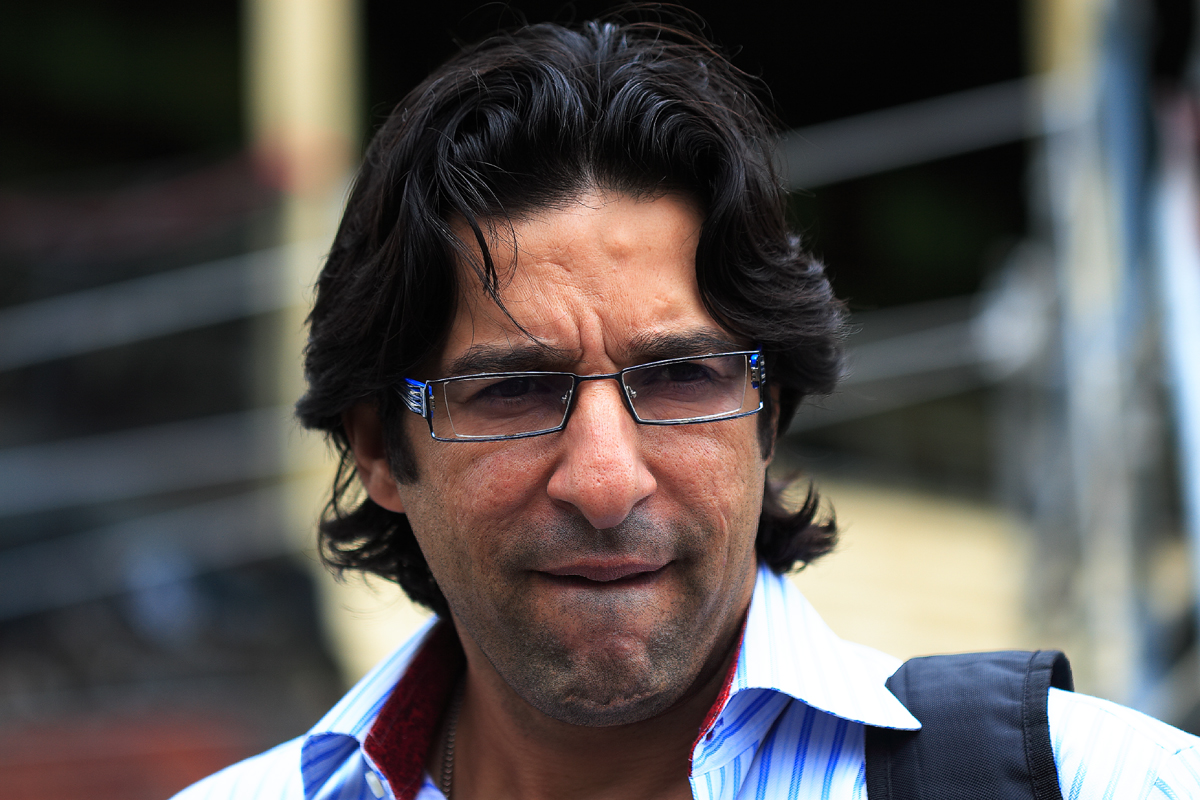
Waseem Akram

Waseem Akram

Waseem Akram

Waseem Akram

Waseem Akram

Waseem Akram

Waseem Akram
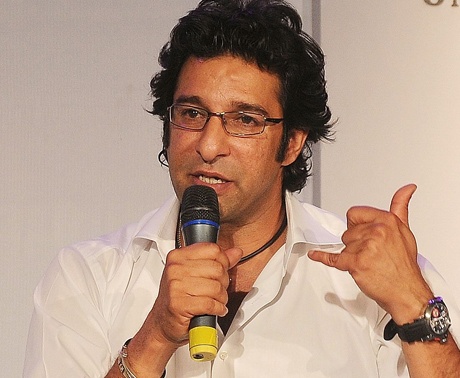
Waseem Akram


Waseem Akram

No comments:
Post a Comment